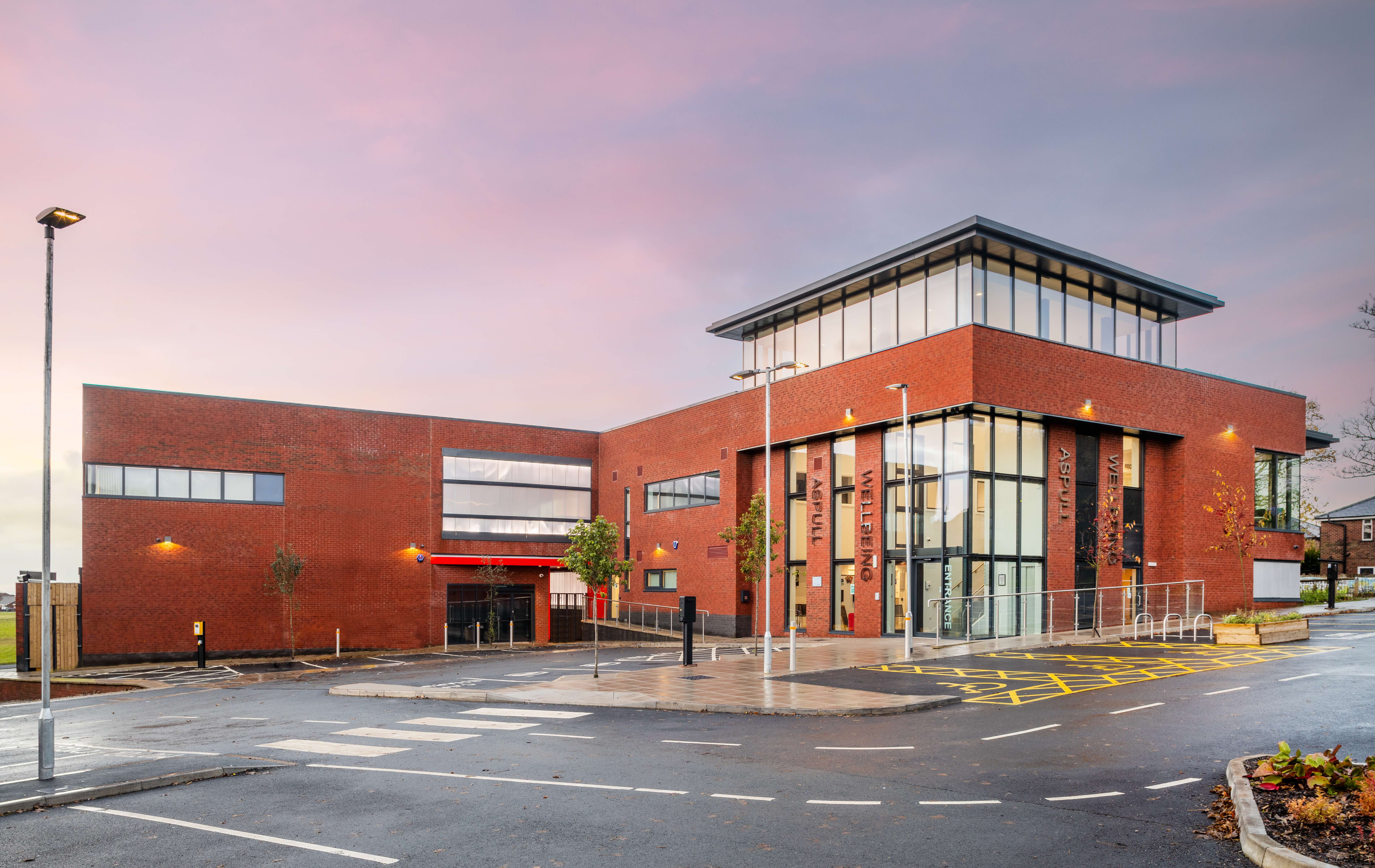
As neighbourhood based models of care expand across the NHS, much of the conversation focuses on workforce, funding, and service reform. But one critical enabler is often overlooked: the buildings and spaces where care actually happens.
Our experience developing, investing in, and operating primary and community healthcare facilities has made one thing clear: estate is not just a backdrop to care delivery. It actively shapes how services run, how teams work together, and how easily patients can access support. If neighbourhood healthcare is to succeed at scale, estate strategy must evolve alongside service models.
Designing for Today’s Care, Not Yesterday’s
Many healthcare buildings currently in use were designed for an earlier model of delivery, one built around fixed appointments, single-provider occupation, and tightly defined room functions. Modern care blends in-person and digital delivery, rotating clinicians, outreach teams, and multidisciplinary collaboration.
When estate is rigid, services are forced to work around the building instead of the building supporting the service. Neighbourhood facilities work best when they are designed as adaptable platforms. Spaces should support shared use, easy reconfiguration, and multiple delivery modes without constant refitting.
Starting with Pathways, Not Floorplans
One of the most common mistakes in estate planning is starting with the building rather than the care pathway. Effective neighbourhood facilities are designed around how patients move through services and how teams interact, not simply around room counts and departmental blocks.
When patient flow and operational reality lead the design process, space becomes more efficient and more useful. When this step is missed, buildings may look correct on paper but create friction in daily use.
Integration cannot be designed in name only. Co-location does not automatically produce collaboration. Layout, shared spaces, and workflow visibility all play a role in whether multidisciplinary working happens.
Making Better Use of What Already Exists
New-build developments have an important role, but they are not always the fastest or most effective route to neighbourhood delivery. In many communities, the strongest opportunities lie in improving and adapting existing buildings that are already well located and familiar to patients.
Repurposing existing estate can deliver results more quickly and often more cost-effectively, but only when supported by targeted investment and operationally informed redesign.
With the right approach, this can be a primary delivery strategy that strengthens continuity and local trust while expanding capacity.
Expanding Care into Community Settings
Delivering neighbourhood care does not always require traditional clinical buildings. High street units, community centres, libraries, and other local venues can play a valuable role in bringing services closer to where people live.
These settings can improve visibility and access, particularly for preventative and lower-acuity services. However, they must be supported properly. Clinical safety, privacy, safeguarding, and operational support still matter and must be designed in from the start.
Involving Communities and Frontline Teams
Neighbourhood facilities are most successful when they are shaped with input from the people who use them and work within them. Engagement should begin early, not only at formal consultation stages.
Different communities have different access patterns, infrastructure constraints, and expectations. Rural and coastal areas, for example, often require smaller hubs supported by outreach and digital delivery rather than large, centralised buildings. Local insight is essential to getting these decisions right.
Frontline teams also bring practical workflow knowledge that significantly improves design quality and long-term usability.
From Static Assets to Enablers of Care
The core shift required in neighbourhood estate thinking is straightforward but important. Healthcare buildings should no longer be viewed as static assets with fixed purposes. They should be treated as adaptable enablers of care.
For the neighbourhood model to work, estate must support flexibility, shared working, and service evolution over time. When buildings are planned and managed this way, they become active contributors to better outcomes, not constraints that services must work around.